

Foxfire Origins
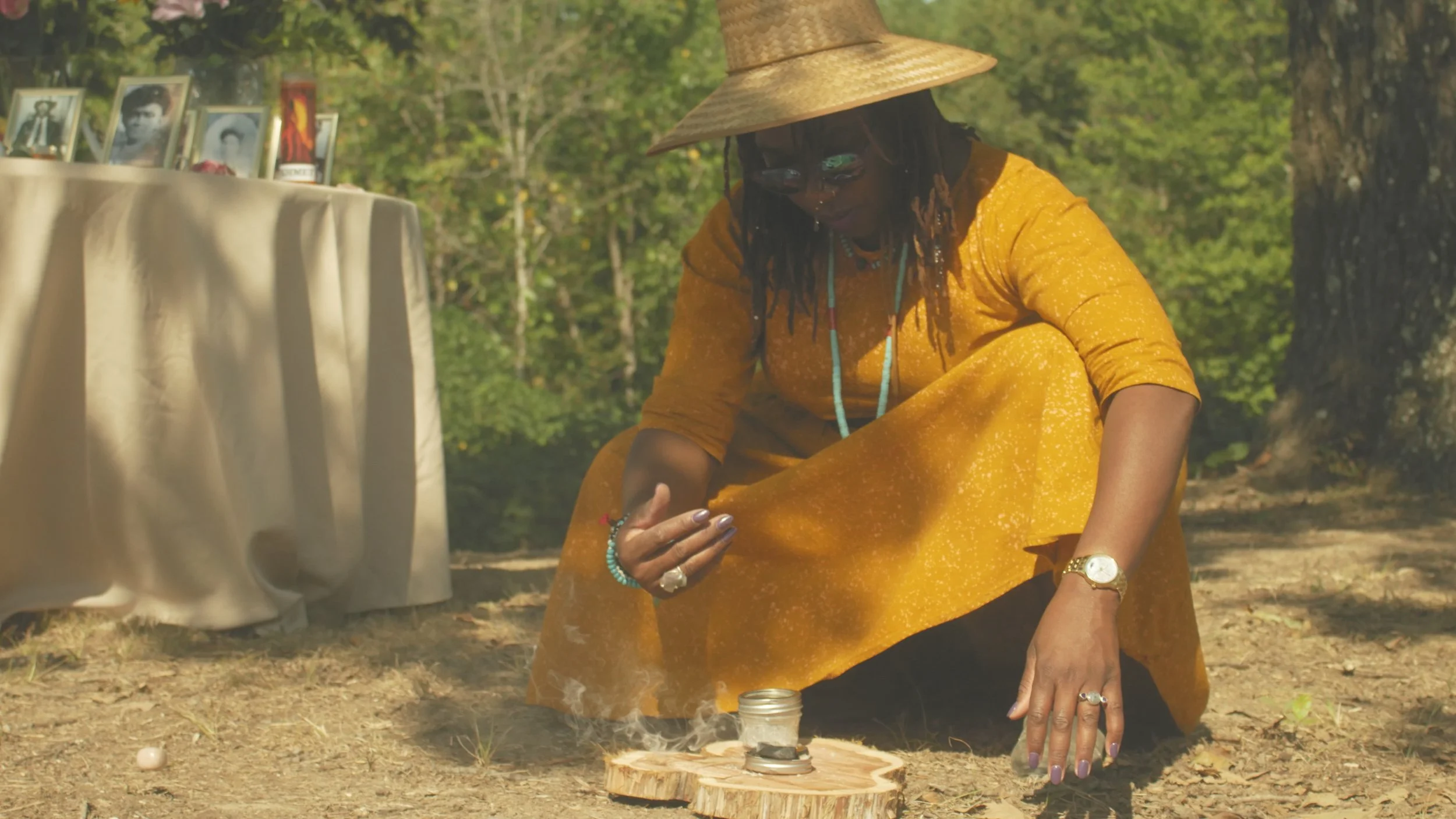
It was family and the land that brought me to the Hill Country Blues.
I never met my grandfathers; both had passed long before my appearance on this plane. I did have both of my grandmothers, though. It is a remarkable thing to be living out the adage about old men planting trees, somehow anticipating that the shade it now casts is for me and mine. My grandfather, Albert Hollowell, wore 3-piece suits, Stetson hats, glasses, and carried a pocket watch. He had a way with animals and was a community veterinarian of sorts. He worked at the saw mill, cutting railroad ties. He was a farmer, although by most accounts, it was my grandmother, Wilmer Guinn, who was the real farmer. In 1918, he filed his written intention to purchase 80 acres of land in the North Mississippi Hill Country, and then purchased those acres in December of that year for $550. I am struck by many things, namely the determination it must have taken to be a black man in 1919 Mississippi, filing his written intention. There is power in our word, and to have that intention documented on paper is a significant manifestation. And while our little corner of Marshall County was full of black-owned farms, their resistance was still met by intimidation and threats from the white power structure. My father tells stories of black families who lost 100s of acres of land. Most often, he recalls one where the family turned over 500 acres to the local police chief to protect a son who had taken a life in self-defense.
My grandfather was blinded by his work at the saw mill when a shard of wood lodged in his eye. An infection ensued and spread to both eyes, robbing him of his sight. Yet he continued to be active. At Ms. Wilma’s funeral, a man who remembered them both quite well told stories of how Albert would walk to Old Highway 7 and hitchhike into Holly Springs. Once there, he would sit on the main square and meet up with other gentlemen, a practice that was a ritual to Black residents until all of the public benches were intentionally pulled up when integration took hold. He shared a story about how Albert even knew a particular woman was walking by because he could “hear the snap of her skirt!”
I imagine that somehow, my grandfather shared the vision that this land we now know as Foxfire would become a place of rest, retreat, deep learning, connection, and celebration. In 1919, his second wife, my grandmother Wilmer Guinn, was born. He was an older man when they married, having lost his first wife and a son to a pandemic that had ravaged the area, while another son was lost to World War 1. When my grandparents married, he was 50, and she was 23 years old. They created a life together on these 80 acres, and all 6 of their children were born on that land via midwife (except for the baby boy, my Uncle Joseph, who was the only child born in a hospital). They would remain on that land until shortly after Albert died in 1962, my father was just 9 years old. He used to tell his sons that he wouldn’t live to see them grow up to be men, so he prepared in the ways that he could. Under Wilma’s watch, they continued to farm and grow all of what the family needed to support themselves. A couple of years after Albert’s death, she remarried Mr. Charlie, a farmer and city worker, and moved to his land off of Marianna Road in Holly Springs– those 60 acres would become the land that I had the most connection with over the years. This was the land that would bring my parents into proximity with each other and the start of their lifelong romance, which began at the age of 11. Ms. Wilma rented the land in Waterford out for a few short years, but for the most part, the land rested undisturbed and fecund for nearly 5 decades.
My parents tell differing yet complementary stories as to how the decision to purchase the land came about. My mother maintains that she told my father to purchase each of his siblings’ shares, as all of them had left for Cleveland, Ohio, long ago and had since built their homes there. My father asserts that he had dreams, clear as day, that his father told him to buy the land, and of working the land with his son (I believe I’m the son, as he only has daughters). Either way, in 1993, he began the process of negotiating with his siblings to acquire their shares in the land. By 2000, I was headed to my first year at Xavier University of Louisiana, my father had retired from the military, and in anticipation, they had started the process of clearing a portion of the land and constructing a simple cabin. Slowly over the course of 2 years, my cousins and a small crew of local carpenters constructed the family home. Every year would bring with it small projects and further investments in the infrastructure. Every line of fencing, and undergrowth cleared came through the blood, sweat, and resources of my parents, Uncle Mark, and the small constellation of mostly family who helped at various phases.
In 2007, we knew we were hosting our family reunions for either side of the family. Being that we’re from Mississippi and that my mom comes from a crew of 14 siblings (7 boys and 7 girls) that easily translates to 200 – 300 people for each gathering. Again, with a small crew of local carpenters, my father got to work pouring the cement floor for a 5,000 sq foot open-air pavilion. He made several long treks with his flatbed trailer to Alabama, where he sourced the metal beams and tin that comprise the pitched roof for this space. This would become the grounding infrastructure for Foxfire as an event and entertainment venue. My father always had this vision of a recreational farm, a place where young people could come to escape the city and cultivate a wonder for nature, livestock, and moving at a different pace.
In 2003, I transferred to Ole Miss to finish up my last semester of undergraduate courses. After an initial culture shock of leaving a vibrant HBCU environment and finding myself in the privileged bubble of Oxford, I eventually found my community. Folks organizing around racial reconciliation, truth and storytelling, musicians, and cultural organizers. As my family discussed what to do next with the pavilion, my parents tapped into their childhood, reflecting on the Sunday blues tradition out in the county. People would gather on each other’s porches, or in juke joints run by folks like Junior Cummings and Junior Kimbrough, and would play the blues. By the time my family had returned to Waterford, there had been a 10 or 15-year gap in that Sunday blues tradition because some of those culture bearers had passed on, and those establishments had ceased to exist.
We decided to test out this idea of reviving the Sunday blues tradition over a dinner with about 25 of our good friends, who happened to be a mix of musicians, artists, historians, ethnomusicologists, and music lovers overall. That included folks like Cedric Burnside, Lightnin’ Malcolm, Guelel Kuumba of Afrissippi, Scott Baretta, etc. (I really have to go back and interview folks to reconstruct who all was a part of that original advisory crew!) Mom cooked up a big, delicious dinner at the family house, and we crowded around a series of dining tables to break bread and enjoy the fellowship. From there, we led folks down the hill to the pavilion, and we gathered in a big circle. It was a cold winter night. We shared the vision of reviving a Sunday blues experience out in the county, and instantly, everyone got it. Guelel played a few songs, as did Cedric, Lightnin’ Malcolm, and the others.
Our first month and a half of being open in the Spring, Cedric and Malcolm played for us every Sunday to get us off the ground. In that first month, we had people attending from all over the world because the folks who follow the blues are a global community. Since that time, we have continued to survive mostly via word of mouth. For the first decade, we hosted Sunday evening blues shows, every Sunday from the end of March to Thanksgiving. For the last 3 years, I convinced my parents to adjust the calendar to only 2nd and 4th Sundays, making more space for accommodating our growing requests for private events and to have a chance for rest. But it is in this way that our unique cultural assets and traditions have been an anchor for our family’s business. It instantly solidified us as a unique intergenerational and interracial gathering space for the community. It gave us endless opportunities to appreciate the power of culture, the deep medicine of the blues, and how music and food, along with the land, work on the body. What a pleasure it is to watch the trauma and stress fall off of our guests' shoulders, to see them breathe deep, to witness the children's sense of wonder as they run wild, kick off their shoes, and go exploring in the woods.
